SKU: 51088042289
philodendron hetero

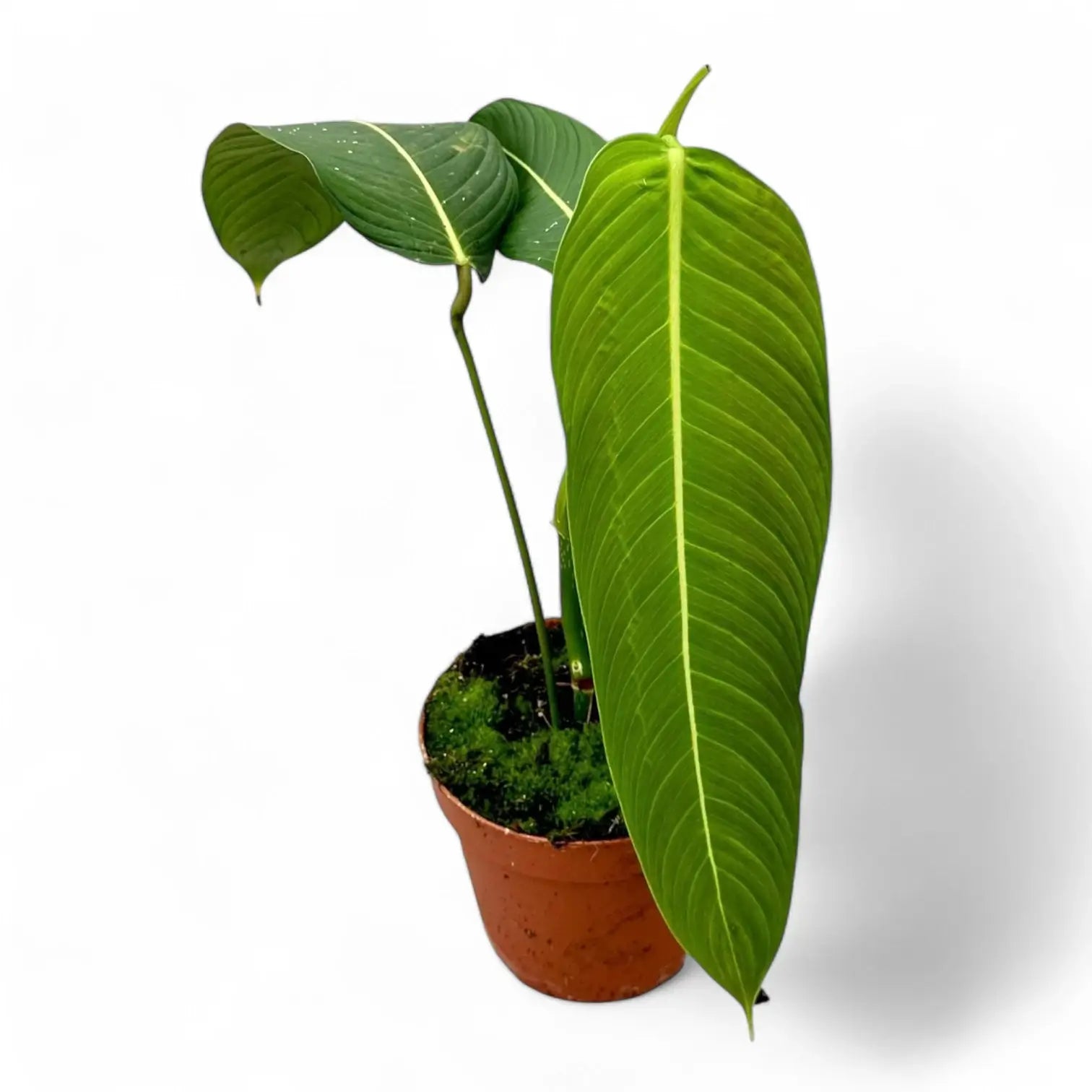
philodendron hetero Philodendron heterocraspedon – Long Ribbed, Scalloped Leaves

Sale price$25.57 Regular price$28.41
Save 10%

Pay in installments of $7.10 with ShopPay, AfterPay and Klarna

Shipping Estimate
USA
  • USA
  • CAN

Ships within 48 hours · Estimated delivery Jul 24 - Jul 29

Promo Codes Available:

For Your Every Summer RSVP, with Code: SUMMER15

Description

philodendron hetero Philodendron heterocraspedon – Long Ribbed, Scalloped LeavesPhilodendron heterocraspedon Croat and D. C. Bay rare South American climbing aroid with elongated, veined foliage Philodendron heterocraspedon Croat and D. C. Bay is a scarce canopy climbing aroid from the rainforests of Colombia and Ecuador. Described in Aroideana (2006), it is recognised for its long, slightly undulating leaves with deeply impressed primary veins. In cultivation, this species responds to firm vertical support, bright filtered

Philodendron heterocraspedon Croat and D.C.Bay – rare South American climbing aroid with elongated, veined foliage

Philodendron heterocraspedon Croat and D.C.Bay is a scarce canopy-climbing aroid from the rainforests of Colombia and Ecuador. Described in Aroideana (2006), it is recognised for its long, slightly undulating leaves with deeply impressed primary veins. In cultivation, this species responds to firm vertical support, bright filtered light, and stable humidity with increasingly dramatic, well-textured foliage.

What makes Philodendron heterocraspedon unique

  • Leaf form: Elongated blades with a smooth matte-gloss finish, undulating margins, and distinct venation.
  • Climbing habit: Anchors to fibrous or moss-covered supports via aerial roots for vertical growth.
  • Ontogeny: Juvenile leaves are narrower with simpler form; mature foliage develops greater width, stronger venation, and margin undulation.
  • Collector appeal: Rarely seen in cultivation, valued for its upright growth and leaf architecture.

From South America’s canopy to your collection

Native to wet lowland and lower montane forests in Colombia and Ecuador, typically between 100 – 800 m elevation. P. heterocraspedon climbs large tree trunks in filtered to low canopy light, benefiting from constant moisture, warm temperatures, and moving air. In situ, its leaves are adapted to intercept dappled sunlight while minimising water loss.

How Philodendron heterocraspedon differs from similar narrow-leaf species

Compared to Philodendron elongatum, heterocraspedon shows more pronounced primary venation and slightly more undulate leaf margins. Unlike P. atabapoense, it lacks the pronounced bicolour contrast between the adaxial (upper) and abaxial (lower) leaf surfaces. It can resemble juvenile P. pedatum, but heterocraspedon maintains a narrower, more elongated blade shape into maturity.

Size and form at dispatch

  • Pot size: 12 – 15 cm nursery pot
  • Approximate height: 25 – 40 cm excluding support
  • Leaf count: Typically 4 – 7 leaves; size varies with growth stage

Images may depict mature plants. Shipped specimens may have smaller juvenile leaves; with strong light, humidity, and a firm pole, foliage will gradually increase in size and complexity. Newly shipped plants may pause growth temporarily while acclimating.

Care guide – keeping Philodendron heterocraspedon thriving

  • Light: Bright, indirect light encourages compact internodes and strong venation; avoid harsh midday sun.
  • Water: Water when the top 2 – 3 cm of substrate are dry; fully saturate, then allow excess to drain.
  • Humidity: Best above 60%; stable high humidity supports larger leaves and better texture.
  • Temperature: Ideal 18 – 28 °C; avoid prolonged drops below 15 °C.
  • Substrate: Airy aroid blend (~35% fine orchid bark, 25% coco coir, 20% perlite/pumice, 10% compost, 10% horticultural charcoal).
  • Feeding: Balanced liquid fertiliser at 25 – 50% label rate every 4 – 6 weeks during active growth.
  • Support: Moss or fibre poles provide texture for aerial root adhesion; secure the stem at each node.

Propagation and growth notes

  • Propagation: Stem cuttings with at least one node and root nub; root in moist sphagnum, airy substrate, or semi-hydro with nutrient solution.
  • Growth rate: Moderate; faster with bright light, warm temperatures, and regular feeding.
  • Hydroponics: Adapts to semi-hydroponic systems if transitioned gradually.

Flowering and inflorescence

Mature plants produce a greenish to pale spathe enclosing a spadix, typical of Philodendron. While ornamental value is minor compared to foliage, flowering indoors is possible in stable, long-term culture.

Common issues and solutions

  • Yellowing leaves: Usually linked to overwatering or compacted substrate; improve drainage and adjust watering frequency.
  • Slow or stunted growth: Increase light (still indirect) and ensure firm pole contact at each node.
  • Pests: Watch for thrips, spider mites, and mealybugs; treat promptly with targeted controls.

Science-based notes

  • Venation function: Prominent primary veins facilitate water transport in long, narrow blades.
  • Ontogeny: Morphological shift from narrow juvenile leaves to more textured mature blades occurs progressively with climbing height.
  • Ecological role: Adds vertical structure in rainforest understories, offering microhabitats for invertebrates.

Etymology

Philodendron derives from Greek phílos (“loving”) and déndron (“tree”), referring to its climbing nature. The species epithet heterocraspedon comes from Greek for “different edge,” referencing variation in the leaf margins.

Order Philodendron heterocraspedon

Add Philodendron heterocraspedon to your collection for a rare canopy climber with elegant, elongated foliage. With stable humidity, bright filtered light, and firm support, this species will reward you with increasingly architectural leaves over time.

Shipping Notes
  • Free Standard Shipping on $100+ Orders to the USA.
  • Except Preorder products are shipped in 48 hours.
  • Delivery to the USA:
  1. Standard Shipping : 3-10 business days
  • If time is of the essence, please consider selecting expedited delivery for faster service.
Exchange/Return Notes
  • We offer a 30-day return/exchange service after receiving.
  • Final sale items are not eligible for returns or exchanges.
  • To process your return/exchange, please contact us at [email protected]
  • Please click here for more details>>> Return & Exchange Policy
SKU: 51088042289

Discover Niche Categories That Outsell philodendron hetero

Top-Converting Item to Boost Your Average Order

4.2 ★★★★★
Based on 20 reviews
Sort
Highest Rating
Newest First
Oldest First
Product Reviews
N
Verified Purchase
Nicole @ Nicoles' Novel Reads
Birmingham, US
★★★★★ 5
Excellent historical novel during the Gilded Age
Format: Hardcover
During the late 1800's Jo Kuan lives with her stand-in father, Old Gin, in a basement. She works as a milliner's assistant until she is let go one day because her employer deems that she is too opinionated and makes customers uncomfortable. However, there is one customer, Mrs. Bell, who admires Jo's craftmanship making intricate knots, which happens to be the lady who resides in the same residence as Jo. However, Mrs. Bell doesn't know Jo and Old Gin take refuge below the residence. Jo is given the opportunity to write as Miss Sweetie for the Focus's advice column when she sends an anonymous letter to the Bells. Miss Sweetie creates a huge buzz in her community. Jo anonymously writes articles regarding societal norms during the Gilded Age time period. What a great opportunity for someone who is "too opinionated." While she works as a lady's maid at the Paynes household during the day, she moonlights as Miss Sweetie at night. Stacey Lee tells a wonderful and insightful story of what it means to be Asian in the South of the United States in the late 1800's. I am always delighted to read historical fiction with characters I can relate to. I often wonder how life was for Chinese-Americans in the past. There is hardly any information about the history of Chinese-Americans living in the United States and how life was for them. Lee is one of my favorite historical fiction novelists. Her characters are relatable and I love being transported to a different time period and a different location every time I pick up one of her books. I absolutely love the voice of Jo. She is sassy but she knows her place. Jo is an advocate of women's rights and equality for all races. Being of Chinese descent, she teeters in between Whites and Blacks. It's hard to find a place in society, especially since there are not many Asian people living in the United States at the time. Most Chinese in the States at the time are men working on the railroad. Jo is longing to know more information regarding her parents. Who is her birth father? Who is her birth mother? Why was she given up? Jo is fortunate to have Old Gin raise her. The twist at the end caught me off guard for sure. Although Jo may feel out of place, she has Old Gin as her family. I also enjoyed reading how Jo finds solace in Sweet Potato and she finds friendship with Noemi. Jo even has a complex relationship with Caroline Payne, who can be very cruel. The Downstairs Girl shows readers a glimpse of the Gilded Age and what is it like to live as an Asian American during that time period. Jo defies the stereotype of Asian women being docile and quiet. Not only does she defy the stereotype for Asian women but she defies the gender stereotype of being a lady. Jo is quite capable of doing what a man does and she is quite outspoken. From writing in a newspaper to horse racing, Jo can do anything!
WAS THIS REVIEW HELPFUL?YesReportShare
Reviewed in the United States on September 11, 2019
G
Verified Purchase
G. R. Jack
Grantham, US
★★★★★ 5
A story of someone who refuses to settle for less
Format: Hardcover
Stacey Lee takes you into a world you’re probably familiar with if you paid any attention in your U.S. History class and helps you see it in new ways. Most of us are familiar with the agonies of post reconstruction era South, but few stories shine a spotlight on the Chinese laborers who were shipped in by Southern plantation owners to replace emancipated slaves. This is the world seventeen-year-old Jo Kwan lives in. Much of Jo’s life is lived in secret. She can’t rent, let alone own, property, so she’s forced to live with her uncle in the basement of a white family who owns a failing newspaper. She can’t interact directly with the white patrons of the hat store because her boss says she makes the customers “uncomfortable.” She can’t even participate in the growing Suffrage movement because the women are only concerned with advancing the rights of white women. What’s a strong, opinionated girl to do? Start an advice column. She starts submitting columns to the paper under the pseudonym Miss Sweetie and immediately attracts attention, both good and bad, from Atlanta’s high society. Through the column, Jo finds her voice and an outlet to express views on her segregated and chauvinistic society. The more freedom she experiences, the more she wants and soon she is uncovering secrets of her past that threaten to ruin her. The Downstairs Girl never lets the reader forget how crushing life was for Chinese and Black Americans during this time, but the book isn’t a downer. Mostly this is due to Jo Kwan being such a spirited and sympathetic character. Her story is one of someone who refuses to settle for less and it’s fun watching her get the best of some of her antagonists. Lee’s writing is also witty and engaging, filled with the kind of southern colloquialisms that help transport the reader to this time and place.
WAS THIS REVIEW HELPFUL?YesReportShare
Reviewed in the United States on December 4, 2019
K
Verified Purchase
KKV
Boise, US
★★★★★ 4
A great vacation read
Format: Kindle
I was looking for something interesting but not a lengthy novel. Really enjoyed this book. It was a quick read while on vacation and is anchored in a historical perspective I had not ever considered, that of being both Chinese and a woman in the South (Atlanta) at the time of the Women’s suffrage movement. The character is subject to the same segregation laws and lack of rights as a Black woman at the time. This is a clever, strong, female character who surmounts several obstacles created by the environment in which she lives.
WAS THIS REVIEW HELPFUL?YesReportShare
Reviewed in the United States on July 27, 2021
A
Verified Purchase
Amazon Customer
Lexington, US
★★★★★ 3
It was alright
Format: Kindle
Pervious to this book, I had no knowledge of the struggles of the Chinese in the South during the post Civil War era. For that reason, I'm glad I read this book. I enjoyed that this book discussed and gave perspective on many social issues of that time. The main character is spunky and likable. There are many unbelievable scenes and conversations that I did not enjoy because they seemed too far-fetched. Why the author had to include a description of a naked man was also not to my liking. Worst of all, though, was the incredible number of similes in this book. There were just too many, and it got annoying. Overall, it was good enough to read, but I do not highly recommend it.
WAS THIS REVIEW HELPFUL?YesReportShare
Reviewed in the United States on August 19, 2023
R
Verified Purchase
R. Kretchman
Carnegie, US
★★★★★ 5
A Chinese in Atlanta
Format: Kindle
The Girl Downstairs was a charming book. Although the writing isn’t particularly sophisticated, it felt like Jo was letting us peek into the pages of her diary—raw, honest, and deeply personal. Her journey, as the main character, was both heartwarming and heartbreaking. Through her eyes, we witness the simple beauty of connection and the ugly truth of prejudice that has plagued our country for far too long. It’s a powerful reminder that humanity should never be measured by the color of one’s skin. This is another great YA read—I highly recommend it.
WAS THIS REVIEW HELPFUL?YesReportShare
Reviewed in the United States on June 15, 2025

recommand products